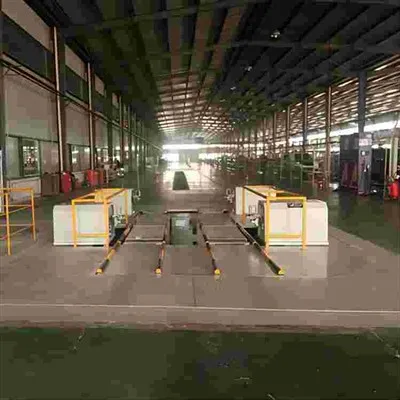
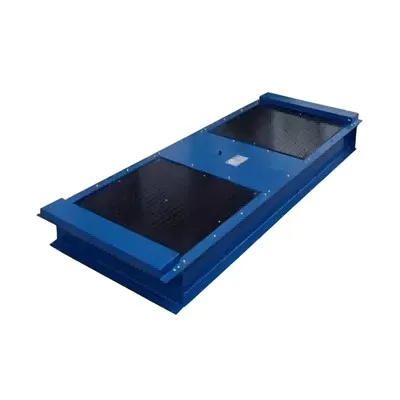
Dual Axle ABS Brake Tester
A single axle ABS brake tester is a device designed to evaluate the performance of the Antilock Braking System (ABS) on a per-axle basis. This type of tester is commonly utilized in automotive service centers and is an essential tool for diagnosing and repairing brake system issues. When a vehicle is driven onto the tester, the system applies the brakes while sensors measure the deceleration of the vehicle's wheels. The tester can detect if the ABS is functioning properly by monitoring the speed of the wheel rotation during braking.
Description
Shandong Zhengneng Auto Test Equipment : Your Professional Single Axle ABS Brake Tester Manufacturer !
Our company has focused on automobile inspection technology research for more than 30 years. Our main products are new car high-end inspection lines (including non-contact dynamic four-wheel alignment, integrated drum platform, gantry headlight instrument, ADAS calibration, rain room drying room, safety Innovative products such as electrical testing and automotive R&D chassis dynamometers) driverless intelligent chassis performance testing system and vehicle external perception and automatic safety function effectiveness testing system, which can replace imported equipment.
Rich Product Range
The company's main products include high-end testing lines (including non-contact four-wheel alignment, comprehensive roller test bench, dual-axis ABS brake tester, gantry headlight tester, etc.), driverless testing lines, offline testing equipment automobile factory ( Four-wheel alignment, brake tester, speed tester, sideslip tester, axle load tester, etc.
Advanced Production Equipment
In order to ensure production, we have different processing equipment, such as lathes, drilling, milling and boring grinders, milling and drilling machines, balancing machines, metal band saws, air compressors, flame cutting machines, metal band saws, plasma cutting machines, radial drills, etc.
Widely Sold
Our equipment is exported to overseas automobile manufacturers such as Russia, Iran, Nigeria, Thailand, Uganda, South Korea, and Myanmar. And our cooperative customers include well-known domestic automobile manufacturers such as Geely, Changan, and GAC.
Quality Guaranteed
The products produced by our company have passed quality inspection, and our team has 3 authorized invention patents, 38 utility model patents, and 22 soft patents.
Single-Axis Contact Wheel Alignment
Single-axis contact wheel alignment, also known as single-plane or single-axis wheel alignment, is a method of aligning vehicle wheels in which adjustments are made along a single axis or plane. This alignment method primarily focuses on adjusting the wheels' toe angle, which is the angle formed by the longitudinal axis of the vehicle and the direction in which the wheels point. In single-axis wheel alignment, the technician adjusts the toe angle of each wheel to ensure that they are parallel to each other and perpendicular to the vehicle's centerline. This alignment method is typically performed using a simple alignment system consisting of a measuring tape, alignment gauges, and alignment turn plates.

Two-Axis Contact Wheel Alignment
Two-axis contact wheel alignment, also known as two-plane wheel alignment, refers to the process of adjusting a vehicle's steering and suspension angles to ensure that the wheels are correctly positioned relative to each other and to the road. This type of alignment involves setting two primary angles: caster and camber. Caster is the angle of the steering axis when viewed from the side. It affects straight-line stability and is measured in degrees. Positive caster means the top of the steering pivot is tilted back towards the vehicle, which helps keep the wheels straight when driving. Negative caster has the opposite effect.

Chuck Type Four-Wheel Alignment Device
A chuck type four-wheel alignment device is a specialized piece of equipment used in automotive service centers to precisely measure and adjust the alignment of all four wheels of a vehicle. Unlike two-axis alignment devices that focus solely on caster and camber angles, a four-wheel alignment system takes into account all the key parameters that affect a vehicle's handling and tire wear, including toe, thrust angle, and sometimes ride height.

Gantry Pass Type Wheel Alignment
Gantry pass type wheel alignment is a method of measuring and adjusting the geometric angles of a vehicle's wheels to ensure they are set to the manufacturer's specifications. This type of alignment system utilizes a large, gantry-like structure that passes over the vehicle, positioning sensors and alignment heads at various strategic points to capture measurements.

Non-Contact Four-Wheel Locator
A non-contact four-wheel locator is an advanced alignment system that uses optical or laser technology to measure the position and orientation of a vehicle's wheels without physically touching them. This technology allows for quick and precise alignment measurements, even on vehicles with damaged or dirty wheels, where traditional contact methods might not be as effective. The system typically consists of a series of cameras or sensors mounted on a gantry or frame that passes over the vehicle. As the gantry moves, the non-contact locators emit a beam of light (such as lasers or structured light) that reflects off the wheels and is captured by the cameras. The reflected light patterns are analyzed by a computer system to determine the exact location and angle of each wheel.

Gantry Automatic Headlight Aimer
Gantry Automatic Headlight Aimer is complex systems used in the automotive industry to calibrate and adjust vehicle headlight alignment. The system uses a gantry structure to house the equipment needed to autonomously perform its tasks, ensuring that the headlights project their beams at the correct intensity and direction specified by the vehicle manufacturer.

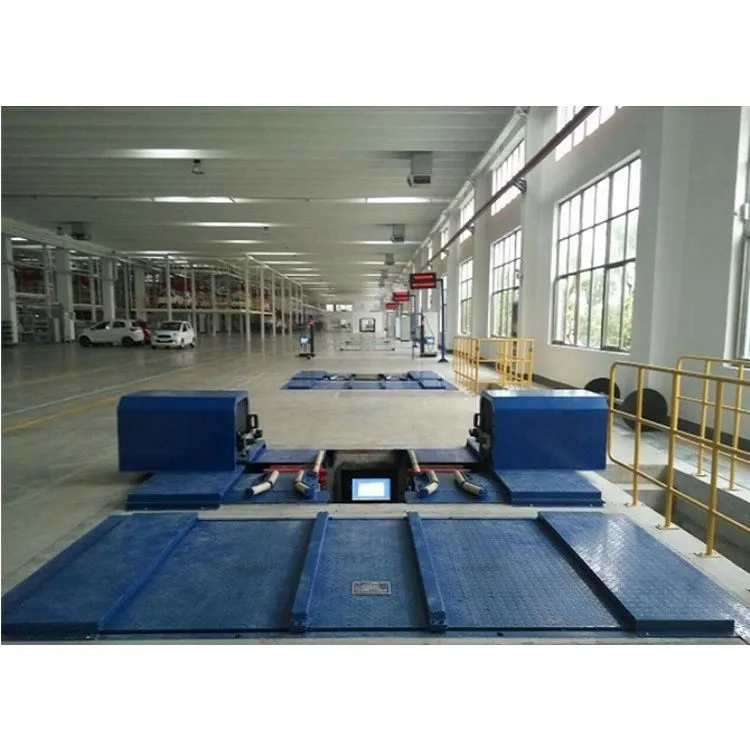
Automobile loading brake test bench is a roller reaction brake bench with loading function, with all functions of roller reaction brake table and axle load meter.

The high-speed ABS brake test bench is capable of testing the braking force of each wheel, the braking difference between the left and right wheels of each axle, the braking force of each wheel, the parking braking force test, the pedal force and hand tension test, and the wheel weight and axle weight test of the vehicle.

The vehicle is measured in the brake force test bench and automatically judged whether it is qualified, and the ABS function can also be tested in this station. Meet the braking force detection function of four-wheel drive vehicles.
What is Single Axle ABS Brake Tester
A single axle ABS brake tester is a device designed to evaluate the performance of the Antilock Braking System (ABS) on a per-axle basis. This type of tester is commonly utilized in automotive service centers and is an essential tool for diagnosing and repairing brake system issues. When a vehicle is driven onto the tester, the system applies the brakes while sensors measure the deceleration of the vehicle's wheels. The tester can detect if the ABS is functioning properly by monitoring the speed of the wheel rotation during braking. If the ABS activates as expected, it will allow the wheel to slow down but not stop completely, preventing lockup and maintaining steering control.
Improved Safety
Single Axle ABS Brake Tester can help prevent accidents by ensuring that the vehicles you are working on have properly functioning brakes.
Reduced Liability
By identifying and repairing brake problems before they cause an accident, a garage can reduce its liability risk.
Increased Efficiency
Single Axle ABS Brake Tester can help garages complete brake inspections more quickly and easily, compared to, for example, Decelerometers. This can free up technicians to work on other vehicles, which can improve efficiency and profitability.
ABS Functionality Testing
Single Axle ABS Brake Testers allow technicians to simulate braking events and test the functionality of ABS systems. They apply controlled brake pressure to the wheels and monitor the ABS response to ensure that it activates correctly in response to wheel lockup.
Parts of Single Axle ABS Brake Tester
Brake Control Unit (BCU)
The Brake Control Unit is the central component of the ABS brake tester responsible for controlling the brake pressure applied to the wheels during testing. It regulates the braking force to simulate different braking scenarios and monitors the ABS response.
Wheel Speed Sensors
Wheel speed sensors are used to measure the rotational speed of each wheel during brake testing. They provide real-time data on wheel speed to the ABS system, allowing it to detect wheel lockup and activate the ABS accordingly.
ABS Hydraulic Unit
The ABS hydraulic unit consists of hydraulic pumps, valves, and accumulators that control brake pressure to individual wheels. It modulates brake pressure during ABS operation to prevent wheel lockup and maintain vehicle stability.
Pressure Transducers
Pressure transducers are sensors used to measure brake pressure applied to the wheels. They provide feedback to the ABS system, allowing it to adjust brake pressure as needed to prevent wheel lockup and ensure effective braking.
Control Panel/Interface
The control panel or interface is the user interface of the ABS brake tester, allowing technicians to input test parameters, select testing modes, and monitor test results. It typically includes buttons, switches, digital displays, and indicator lights for user interaction.
Data Display Unit
The data display unit shows real-time data during brake testing, including wheel speed, brake pressure, ABS activation, and braking distance. It provides technicians with visual feedback on the performance of the ABS system and helps identify any issues or abnormalities.
Diagnostic System
The diagnostic system includes software and hardware components designed to diagnose faults or malfunctions in the ABS system. It may provide error codes, diagnostic messages, or alerts indicating the nature of the problem, allowing technicians to troubleshoot and resolve issues efficiently.
Safety Features
Safety features are essential components of the ABS brake tester to ensure operator safety during testing procedures. These may include emergency stop buttons, safety interlocks, protective enclosures, and warning indicators to prevent accidents and minimize the risk of injury.
Power Supply
The power supply provides electrical power to the ABS brake tester to operate its electronic components and hydraulic systems. It may be mains-powered or battery-powered, depending on the design and portability of the tester.
Calibration Standards
Calibration standards or reference tools are used to calibrate the ABS brake tester periodically to ensure accurate and reliable testing results. Calibration standards verify the accuracy of the tester's measurements and ensure consistency over time.
How to Choose Single Axle ABS Brake Tester
Operation
Single Axle ABS Brake Tester will measure the torque reaction generated by the vehicle brakes against a roller turned by a motor, while the plate brake testers have strain gauges attached to a plate supported on bearings, and measure the forces required to hold the plate, when a vehicle is braked on top of it. Decelerometers are placed in the vehicle and have a pendulum (more recently, airbag type accelerators) that moves when a vehicle is braked. The amount of 'swing' on the pendulum is measured to indicate deceleration during braking.
Safety
Single Axle ABS Brake Tester is a comparatively safe method of testing, as the vehicle does not move during the brake test. Instead the rollers act as the road and turn under the wheels. With both the plate brake tester and the decelerometer, testing requires the vehicle to be driven and braked on the plates, usually within the confined space of a vehicle workshop or roadside. This could be a hazard to other road or workshop users.
Accuracy
Single Axle ABS Brake Tester use the same braking surfaces to test all of the wheels, on all of the vehicles; ensuring accurate comparative tests. Plate brake testers use the same braking surfaces for all of the wheels, on all of the vehicles, while the decelerometer tests on-road so the braking surface can vary from very good to very bad, depending on conditions. While roller brake testers test all vehicles at a consistent test speed, both the Decelerometer and Plate Brake Testers tend to test at variable test speeds; depending on how the vehicle is driven.
Adaptability
Single Axle ABS Brake Tester can test the entire range of every brake fitted to the vehicle, from zero to full braking, or wheel lock, consistently and repeatedly, without the influence of momentum or weight transfer. The plate brake testers and decelerometers cannot test the entire range of a vehicles brake successfully.
How to Use Single Axle ABS Brake Tester
Prepare
Before starting, make sure that the area is clear and safe. Check whether the tester is horizontally calibrated according to the manufacturer's guide.
Examine
Perform visual inspections of the brake system to find any obvious signs of damage or wear, such as leakage, abnormal wear patterns on missing parts or brake pads or shoes.
Position the Vehicle
Drive the vehicle on the tester so that the shaft to be tested can be placed on the drum or drum of the tester. Make sure the vehicle is stable and release the parking brake.
Connection System
If necessary, connect any necessary cables or hose from the tester to the ABS module or diagnostic port of the vehicle. This allows the tester to interface with the vehicle's electronic control unit (ECU).
Test
Activate the tester and follow it to start the brake test. The system usually uses brakes, or prompts you to manually perform brakes. Tests measuring the deceleration of the wheel and compare it with the expected deceleration rate.
Data Collection
Observe the readings provided by testers. It should show whether ABS participates correctly during braking. Find any error code or diagnostic information that may indicate the ABS system problem.
Analyze
Analyze the test results. If ABS is involved in proper speed and maintains consistent deceleration without allowing the wheels to lock, ABS may run normally. If not, further investigation may be required to determine the cause of the fault.
Secure Shutdown
Always switch off and secure the main switch with a padlock before conducting any repair, maintenance, or setup work.
Fire Hazard Prevention
Regularly clean the roller set to prevent fire hazards caused by rubber abrasion. Remove any abrasion before starting maintenance work.
Overheating Awareness
Exercise caution regarding overheating parts when working on the control cabinet or roller sets.

Certificate


Frequently Asked Questions
Hot Tags: dual axle abs brake tester, China dual axle abs brake tester manufacturers, suppliers, factory, Vehicle Speedometer Tester, Dual Axle ABS Brake Tester, Auto Side Slip Tester, Head up Display HUD , Gantry Automatic Headlight Aimer, Load Brake Tester